Share Blog Article Via
<<< EMBIT NEWSLETTER >>>
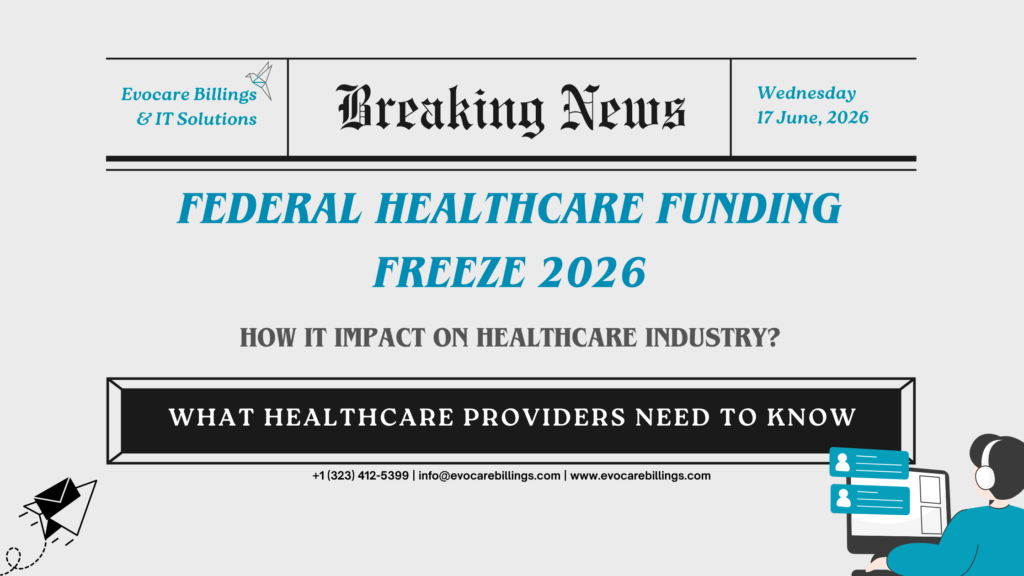
Healthcare providers across the United States are closely monitoring recent federal actions affecting healthcare funding. During July 2026, the U.S. Department of Health and Human Services (HHS) announced the temporary deferral of more than $1 billion in Medicaid payments to California and Minnesota while certain high-risk claims undergo additional review. Federal officials stated that the action is part of a broader effort to investigate suspected fraud, waste, and unsupported claims before releasing taxpayer funds.
Although this action currently targets specific Medicaid payments rather than the entire healthcare system, it has raised concerns among healthcare organizations about reimbursement timelines, revenue cycle stability, and future compliance expectations.
For physicians, hospitals, behavioral health providers, and medical billing companies, this development highlights an important reality: healthcare organizations must be financially prepared for reimbursement disruptions.
≡What Is the Federal Healthcare Funding Freeze?
The recent federal action is not a nationwide suspension of all healthcare funding. Instead, HHS and CMS have temporarily deferred selected Medicaid payments while requesting additional documentation supporting high-risk claims submitted by certain states.
According to federal officials, the review focuses on ensuring Medicaid payments are supported by complete documentation and comply with federal program requirements. States may regain access to deferred funding once the requested information is reviewed and approved.
While the review is currently limited, many healthcare organizations are watching closely because similar funding reviews could influence reimbursement timing in other programs if additional oversight expands.
≡Why Healthcare Providers Should Pay Attention
Every healthcare practice depends on predictable cash flow. Even when patient volume remains steady, delayed reimbursements can quickly create financial pressure.
If Medicaid payments slow down, providers may experience:
- • Longer reimbursement cycles
- • Increased accounts receivable
- • Cash flow challenges
- • Greater administrative workload
- • More documentation requests
- • Increased claim reviews
For smaller independent practices, even temporary reimbursement delays can affect payroll, vendor payments, staffing decisions, and future investments.
This is why proactive revenue cycle management has become more important than ever.
≡How This May Affect Medical Billing
Medical billing teams play a critical role during periods of increased payer scrutiny.
Insurance companies and government programs often strengthen documentation reviews whenever federal oversight increases. Claims that previously processed without issue may now receive additional review or requests for supporting documentation.
Medical billing professionals should focus on:
Maintaining accurate patient eligibility verification, ensuring complete provider documentation, submitting clean claims on the first attempt, monitoring payer updates daily, and responding quickly to additional documentation requests. Strong denial management processes can also reduce payment delays when reimbursement policies become stricter.
Practices with organized billing workflows are generally better positioned to manage temporary reimbursement disruptions.
≡Revenue Cycle Management Becomes Even More Important
Periods of funding uncertainty remind healthcare organizations that revenue cycle management extends far beyond claim submission.
An effective RCM strategy includes:
- • Accurate patient registration
- • Insurance verification
- • Coding compliance
- • Clean claim submission
- • Denial prevention
- • Payment posting
- • Accounts receivable follow-up
- • Financial reporting
Healthcare organizations that actively monitor every stage of the revenue cycle often recover payments faster and reduce unnecessary revenue leakage.
≡What Providers Can Do Right Now
Although providers cannot control federal funding decisions, they can strengthen their internal financial operations.
Healthcare organizations should consider reviewing outstanding Medicaid claims, auditing documentation quality, monitoring accounts receivable aging, reducing preventable claim denials, verifying coding accuracy, and maintaining regular communication with payers regarding policy updates.
Practices should also evaluate whether their current billing workflows can efficiently respond to documentation requests without delaying reimbursement.
Preparing before payment disruptions occur is significantly easier than recovering lost revenue afterward.
≡What Does This Mean for Patients?
Most patients will not experience immediate changes because of the current Medicaid payment review.
However, if reimbursement delays continue for an extended period, some healthcare organizations may face financial strain that could indirectly affect scheduling, staffing, or operational efficiency. At this time, the federal review primarily concerns payment verification rather than patient eligibility or benefits.
≡Looking Ahead
Healthcare regulations continue to evolve, and providers should expect increased emphasis on documentation accuracy, fraud prevention, and financial accountability.
Organizations that invest in compliance, coding accuracy, and efficient revenue cycle management will be better positioned to adapt to future policy changes while protecting cash flow and maintaining quality patient care.
Whether reimbursement delays result from policy updates, payer audits, or government funding reviews, strong billing operations remain one of the best defenses against financial disruption.
≡How Evocare Billings Helps Healthcare Providers
At Evocare Billings & IT Solutions LLC, we help healthcare providers maintain healthy cash flow even during periods of changing payer regulations.
Our experienced Revenue Cycle Management specialists provide:
- • End-to-end Medical Billing Services
- • Medicaid and Commercial Claims Management
- • Denial Prevention & Appeals
- • Eligibility & Benefits Verification
- • Accounts Receivable Recovery
- • Credentialing & Enrollment
- • Revenue Cycle Optimization
- • Compliance-Focused Billing Solutions
By combining technology, experienced billing professionals, and proactive claim management, we help providers reduce denials, accelerate reimbursements, and improve financial performance regardless of changing healthcare policies.
≡Conclusion
The recent federal Medicaid payment deferrals serve as an important reminder that healthcare reimbursement depends on more than patient care alone. Strong documentation, compliant billing, and proactive revenue cycle management remain essential for maintaining financial stability.
While the current action targets specific Medicaid payments under review, healthcare providers nationwide should use this opportunity to strengthen billing processes, improve compliance, and prepare for future regulatory changes.
Organizations that prioritize accurate medical billing today will be better equipped to navigate tomorrow’s healthcare landscape.
Contact us today at info@evocarebillings.com or call (323) 412-5399 to explore how we can help your practice grow with smarter, more efficient billing solutions

Newsletter
Stay updated with industry trends, tips, and smart revenue cycle insights.

Case Study
See how real practices transformed revenue cycles and overcame billing challenges.

Let's get in touch
Please fill up the form, one of our AAPC certified medical biller and coder will reach out to you