Share Blog Article Via
<<< EMBIT NEWSLETTER >>>
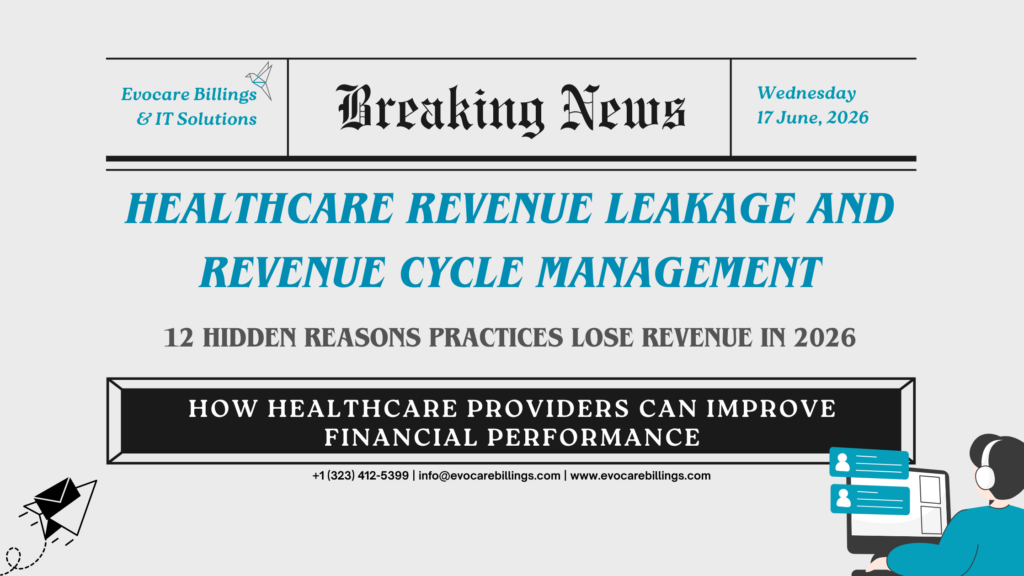
Many healthcare providers focus on increasing patient volume to grow their practice. However, the reality is that many organizations are losing thousands of dollars every month without realizing it. The problem is not always a lack of patients. In many cases, the issue is healthcare revenue leakage.
Revenue leakage occurs when a healthcare organization fails to collect the full reimbursement it has earned for services provided. These losses often go unnoticed because they happen throughout the Revenue Cycle Management (RCM) process.
From eligibility verification errors and claim denials to credentialing delays and aging accounts receivable, even small inefficiencies can significantly impact a practice’s financial performance.
In 2026, as payer requirements continue to evolve and reimbursement rules become more complex, healthcare organizations must identify and eliminate the hidden causes of revenue leakage.
>>What Is Healthcare Revenue Leakage?
Healthcare revenue leakage refers to any preventable loss of revenue that occurs before, during, or after the claim submission process.
Unlike obvious financial losses, revenue leakage often develops gradually through operational inefficiencies, billing errors, delayed follow-up activities, and missed reimbursement opportunities.
Many healthcare organizations only discover these problems during a medical billing audit or financial review.
The good news is that most revenue leakage issues can be identified and corrected through proper revenue cycle management strategies.
>>12 Hidden Revenue Cycle Mistakes
1. Inaccurate Patient Eligibility Verification
One of the most common causes of revenue leakage begins before the patient is even seen.
When insurance eligibility is not verified accurately, claims may be submitted to inactive plans, incorrect payers, or plans with coverage limitations.
These errors often result in denied claims, delayed payments, and increased administrative costs.
Proper eligibility verification helps ensure claims are billed correctly from the start.
2. Prior Authorization Errors
Insurance companies continue to expand prior authorization requirements across many specialties.
Missing, incomplete, or expired authorizations can result in claim denials that are difficult to overturn.
Many healthcare organizations underestimate how much revenue is lost due to authorization-related issues.
Implementing a structured authorization process can significantly reduce reimbursement delays.
3. Medical Coding Errors
Accurate coding remains one of the most important components of successful medical billing.
Incorrect ICD-10, CPT, or HCPCS codes can trigger denials, underpayments, audits, and compliance concerns.
Even minor coding mistakes may result in substantial revenue losses over time.
Regular coding reviews and staff education help improve reimbursement accuracy.
4. Credentialing and Enrollment Delays
Many providers begin seeing patients before payer enrollment is fully completed.
Unfortunately, services rendered before credentialing approval may not be reimbursed.
Credentialing delays can create significant revenue gaps for new providers and expanding practices.
Maintaining proactive enrollment management helps prevent these losses.
5. High Claim Denial Rates
Claim denials continue to be one of the largest threats to healthcare revenue.
Many denied claims are never appealed or corrected.
As a result, practices often write off revenue that could have been recovered.
Monitoring denial trends and implementing denial management strategies can dramatically improve collections.
6. Failure to Submit Clean Claims
A clean claim is one that is submitted correctly the first time without errors or missing information.
Healthcare organizations with low clean claim rates often experience delayed reimbursements and increased administrative expenses.
Improving claim accuracy remains one of the fastest ways to increase revenue cycle performance.
7. Aging Accounts Receivable
Outstanding accounts receivable represent earned revenue that has not yet been collected.
The longer a claim remains unpaid, the lower the likelihood of successful reimbursement.
Many practices focus heavily on new claims while neglecting older balances.
Consistent accounts receivable follow-up is essential for maintaining healthy cash flow.
8. Underpaid Claims
Not all revenue leakage comes from denied claims.
Insurance companies occasionally process claims incorrectly and reimburse less than the contracted amount.
Without regular payment audits, these underpayments often go unnoticed.
Payment variance analysis can help recover lost revenue.
9. Poor Patient Collections
Patient responsibility continues to increase due to higher deductibles and out-of-pocket expenses.
Many healthcare organizations struggle to collect balances after services have been provided.
A lack of financial transparency can create collection challenges and impact revenue.
Improving patient communication and payment processes can increase collection success rates.
10. Inadequate Revenue Cycle Reporting
Many practices rely on limited financial reporting and fail to monitor key performance indicators.
Without visibility into denial rates, collection percentages, reimbursement trends, and aging accounts receivable, revenue leakage can continue unnoticed.
Data-driven, decision-making is critical for long-term financial success.
11. Technology and Workflow Inefficiencies
Outdated billing systems and manual workflows often contribute to preventable errors.
Healthcare organizations that fail to adopt automation and modern revenue cycle technologies may experience higher administrative costs and slower reimbursement cycles.
Technology can improve efficiency while reducing revenue loss.
12. Lack of Regular Medical Billing Audits
Many revenue cycle issues remain hidden until an audit is performed.
Regular billing audits help identify compliance concerns, coding inaccuracies, denial trends, and reimbursement opportunities.
Organizations that conduct routine audits often achieve stronger financial performance and improved operational efficiency.
>>The Growing Impact of Revenue Leakage in 2026
As healthcare reimbursement becomes increasingly complex, revenue leakage is expected to remain a major challenge for providers across the United States.
Insurance carriers continue to implement stricter documentation requirements, enhanced claim review processes, and more sophisticated reimbursement controls.
Healthcare organizations that fail to address revenue leakage risk higher denial rates, slower cash flow, and reduced profitability.
Practices that proactively optimize their revenue cycle will be better positioned to maintain financial stability and support long-term growth.
>>How Healthcare Practices Can Prevent Revenue Leakage
The most effective approach to reducing revenue leakage is implementing a comprehensive revenue cycle management strategy.
Healthcare providers should focus on strengthening every stage of the reimbursement process.
This includes improving eligibility verification, enhancing prior authorization workflows, conducting regular coding audits, monitoring claim denial trends, accelerating accounts receivable follow-up, and ensuring timely provider credentialing.
Organizations should also leverage advanced billing technology, revenue analytics, and automation tools to identify financial risks before they impact collections.
Partnering with an experienced Medical Billing and Revenue Cycle Management Company can further help providers improve reimbursement accuracy, recover lost revenue, and optimize overall financial performance.
By proactively addressing revenue leakage, healthcare organizations can strengthen cash flow, improve operational efficiency, and maximize reimbursement opportunities in an increasingly competitive healthcare environment.
>>Conclusion
Healthcare revenue leakage is one of the most overlooked financial challenges facing providers today. While the losses may not always be visible, their impact can significantly affect profitability and growth.
Understanding the hidden causes of revenue leakage is the first step toward protecting revenue and improving financial performance.
Organizations that invest in strong revenue cycle management processes, continuous monitoring, and proactive billing strategies will be best positioned to reduce losses and achieve sustainable success in 2026 and beyond.
Contact us today at info@evocarebillings.com or call (323) 412-5399 to explore how we can help your practice grow with smarter, more efficient billing solutions

Newsletter
Stay updated with industry trends, tips, and smart revenue cycle insights.

Case Study
See how real practices transformed revenue cycles and overcame billing challenges.

Let's get in touch
Please fill up the form, one of our AAPC certified medical biller and coder will reach out to you